Where to Stay in Tiwai Island, Sierra Leone
If you are searching for where to stay in Tiwai Island, the first thing to know is that Tiwai is not a normal hotel destination. It is a community-run wildlife sanctuary on the Moa River in southeastern Sierra Leone, reached by road and then boat, and its appeal is exactly that it still feels remote, quiet, and lightly touched. Tiwai’s own official accommodation is simple rather than luxurious, and that is a big part of the experience: you are staying beside rainforest trails, riverbanks, and a conservation site rather than in a polished resort strip. Since 2025, Tiwai has also formed part of the UNESCO-listed Gola-Tiwai Complex, which adds even more weight to its conservation value and why the stay feels so different from mainstream safari or beach tourism.
The short answer is this: if your main goal is wildlife, atmosphere, and the full Untouched Travels kind of experience, the best place to stay is on Tiwai Island itself. If your priority is comfort, air-conditioning, or breaking up a long overland journey, the smarter move is to stay a night in Bo or Kenema before or after your island visit. There is no dense cluster of boutique lodges around Tiwai, and pretending otherwise would make this article less useful than it should be. Tiwai is a place where the “best stay” is really about choosing the right balance between immersion and convenience. (tiwaiisland.org)
Stay on Tiwai Island itself if you want the real experience
For most travelers, staying on the island is the right choice. Tiwai’s official site says visitors can either camp on the island or stay in one of the lodge rooms, with current public-facing accommodation focused on three double rooms and four single rooms. The facilities are intentionally basic but practical: solar lighting, water access, bathrooms, a kitchen with utensils and gas hob, and an outdoor dining area. Meals are part of the character of the place too, with local Sierra Leonean food prepared by community members and fruit available in season. That setup tells you almost everything about Tiwai: this is an eco-stay that puts you close to the forest, not a polished hotel product dressed up as wilderness. (tiwaiisland.org)
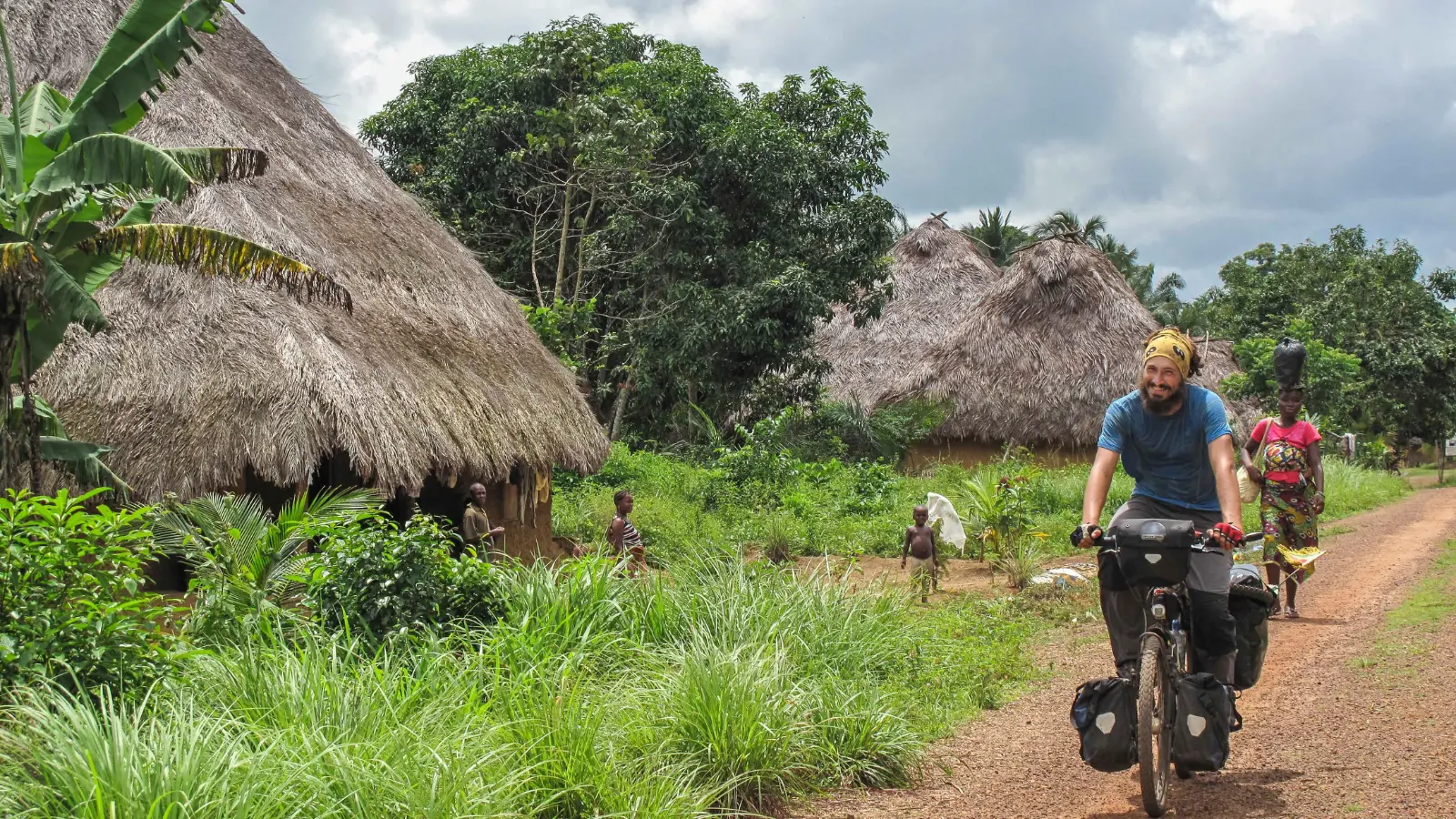
From the route descriptions, visitor reviews, and travel photo essays we reviewed, the on-island stay seems to feel more like sleeping inside a living conservation landscape than “checking into a hotel.” One recent traveler described reaching the island by shared transport, motorbike, and then small boat before arriving at a low-rise encampment in the forest, while photos and narrative from the Moa River show sandy banks, dugout canoes, rocks, dense greenery, and quiet river reflections rather than built-up tourism infrastructure. Another recent traveler called it the “most authentic jungle exposure” they had experienced, even while noting that the accommodation was the most basic of the trip. That is exactly why staying on the island works so well for birders, photographers, naturalists, and travelers who do not want to dilute the experience with an urban overnight somewhere else. (traveladventures.org)
The island stay also makes practical sense because Tiwai’s best activities are timed around the forest rather than your transport schedule. Official tours include early morning and late afternoon forest walks, river tours, beaches in the dry season, and even night walks or river outings that can be arranged to look for wildlife such as the pygmy hippopotamus. Visitor comments on the official site specifically praise the night forest trip, river trip, bird sightings, and helpful staff. In other words, if you sleep on the island, you are in the right place when the sanctuary is most atmospheric: just before sunrise, late in the day, and after dark. A rushed in-and-out visit misses the strongest part of Tiwai’s rhythm. (tiwaiisland.org)
You do, however, need to go in with the right expectations. Independent operator descriptions and traveler feedback consistently describe Tiwai’s rooms as very basic, even when comfortable. Rainbow Tours, which uses the research-centre accommodation, describes three double rooms, four single rooms, shared bathrooms, desk fans, mosquito netting, and intermittent electricity. That matches the tone of official visitor feedback, where guests praise the rooms and staff but never pretend this is luxury lodging. So if you book the island, do it because you want proximity to the forest, the river, and the wildlife soundtrack at night, not because you want polished design or resort amenities. (Rainbow Tours)
Stay in Bo if you want the easiest stopover before or after Tiwai
If you are not ready to go straight into a basic eco-stay, Bo is the best practical stopover. Tiwai’s own directions explain why: the standard public route runs from Freetown to Bo on a paved highway, then from Bo to Potoru, then by motorbike to Kambama, and finally by canoe or motorboat to the island. The same official leaflet notes that the Freetown-to-Bo leg takes around three to four hours and the Bo-to-Potoru leg around three hours. That makes Bo the most logical place to break the journey, especially if you are coming from the capital and do not want to arrive on the island tired, dusty, and too late to enjoy an evening walk.
Bo also gives you a comfort reset. Visit Sierra Leone lists Dohas Hotel in Bo with air conditioning, a restaurant, pool, gym, and prices starting around $30 on its platform, while its Bo destination page describes the hotel as a comfortable place to cool down, shower, and use Wi-Fi after a hot day in town. For travelers who love nature but still want one dependable “proper hotel” night before going off-grid, Bo is the sensible compromise. You can sleep well, reorganize your bags, stock up on the small things you forgot, and head to Tiwai the next morning in a much better mood. (VSL Travel)
Bo is especially good for travelers who want Tiwai but do not want Tiwai to be their very first sleep after a long international arrival and overland transfer. That matters more than people admit. On paper, going straight through can look efficient. In reality, Tiwai is accessed by several legs of transport and a boat crossing, and part of the charm is arriving with enough daylight and energy left to appreciate where you are. Bo is especially appealing for couples, older travelers, and anyone mixing comfort with adventure instead of forcing an exhausting same-day push.
Stay in Kenema if Tiwai is part of a wider eastern Sierra Leone trip
Kenema is the better base if your trip already includes eastern Sierra Leone and you want a more conventional hotel stay before or after the island. Compared with Tiwai’s simple lodge and Bo’s practical stopover feel, Kenema gives you more choice. Visit Sierra Leone lists Paloma Guest House, Luawa Resort Hotel, Capitol Hotel, and Ericson Guest House as examples in and around Kenema, with descriptions emphasizing air-conditioning, hot water, pools in some properties, restaurants, and quieter guest-house options away from the center. Paloma in particular is presented as a 15-room guest house with hot and cold showers, satellite TV, and some rooms with balconies, while Luawa is described as having air-conditioned rooms, hot running water, Wi-Fi, a pool, and a restaurant. (VSL Travel)
Kenema is not the clearest public-transport gateway in Tiwai’s own official directions, so we would not call it the default base for first-time independent visitors. But if you already have a driver, are combining Tiwai with Kenema-based travel, or simply want a more comfortable post-rainforest recovery night, it makes sense. It is also a better pick for travelers who want a real bed, hot shower, and urban services before continuing deeper into eastern Sierra Leone. This is the choice for comfort-first travelers who still want to experience Tiwai, but do not want every night of the trip to be rugged.
Don’t count on Potoru or Kambama as your “base”
One of the easiest mistakes to make when planning Tiwai is assuming the transit villages near the access point will function like mini traveler hubs. Tiwai’s own directions make clear that after Potoru, the road narrows and the final approach to Kambama is by motorbike before the boat transfer. Travel accounts describe Kambama as the point where the road effectively ends and the river crossing begins. That suggests a better mindset: treat Potoru and Kambama as part of the journey, not as your polished fallback accommodation zone. Unless you have something pre-arranged locally, they are not the places to build your trip around.
Which option is best for your travel style?
If you are the kind of traveler who chose Untouched Travels for a reason, the island lodge is probably the one you actually want. It puts you in place for dawn birding, late-day forest walks, and that rare feeling of hearing the forest settle down around you at night. If you are a budget-minded backpacker or very independent traveler, camping on the island is the most immersive option, and an older public price list also suggests Tiwai has at times offered dormitory-style or research-lodge beds, though those should be confirmed directly because the current official accommodation page emphasizes camping plus lodge rooms. If you are comfort-first, or traveling with someone who enjoys wildlife but not rough edges, book a hotel in Bo or Kenema and keep Tiwai as the adventurous center of the trip rather than the whole trip. (tiwaiisland.org)
For couples, Tiwai works best when you lean into what it is. The official site publishes double rooms, and the setting itself is the romance: river transfers, sunset boat rides, outdoor meals, and the feeling of being far from mass tourism. For photographers and birders, sleeping on the island is even more important because the best light and wildlife activity are not aligned with a same-day transport schedule. For families, it depends on the family. Adventurous older children may love it. Families looking for resort-style downtime should stay in a city hotel first and manage expectations honestly. (tiwaiisland.org)
How long should you stay?
Our honest take is that one night is the bare minimum and two nights is better. The official activity structure already suggests why: forest walks are split across morning and afternoon windows, there are separate river and beach experiences, and night excursions are their own thing. Traveler accounts back this up. One older but still useful write-up described regretting the idea of staying only one night, while recent accounts from the island show how much of the experience comes from repeated walks and simply settling into the soundscape and pace of the place. Tiwai is not somewhere you “tick off” in a rushed few hours and fully understand. (tiwaiisland.org)
Booking tips before you commit
Because Tiwai’s inventory is tiny, book ahead and confirm everything directly. The official site says bookings are handled through a downloadable booking form sent to the Tiwai team by email, and the contact page lists both the main Tiwai address and a phone number for visitor enquiries. Bring the basics the official leaflet recommends: a towel, toiletries, torch, and insect repellent. If you want non-traditional food, the site says to request it in advance. Also think carefully about seasonality. Sierra Leone tourism guidance notes that the wet season can make travel much more difficult and roads impassable, while December and January are especially interesting for birdwatchers, even if harmattan can affect visibility. (tiwaiisland.org)
Final verdict
So, where should you stay on Tiwai Island? On the island itself, if you want the place rather than just the pin on the map. Stay in Bo if you want the smoothest, most sensible stopover. Stay in Kenema if you are already traveling through eastern Sierra Leone and want more hotel comfort around the wild part of your trip. The clearest conclusion is that Tiwai works best when you do not try to force it into a standard “best hotel area” template. Its value is precisely that it still feels remote, community-led, and close to the forest. The right stay here is the one that lets you feel that without arriving too exhausted to enjoy it.