Is Taghazout Worth Visiting?
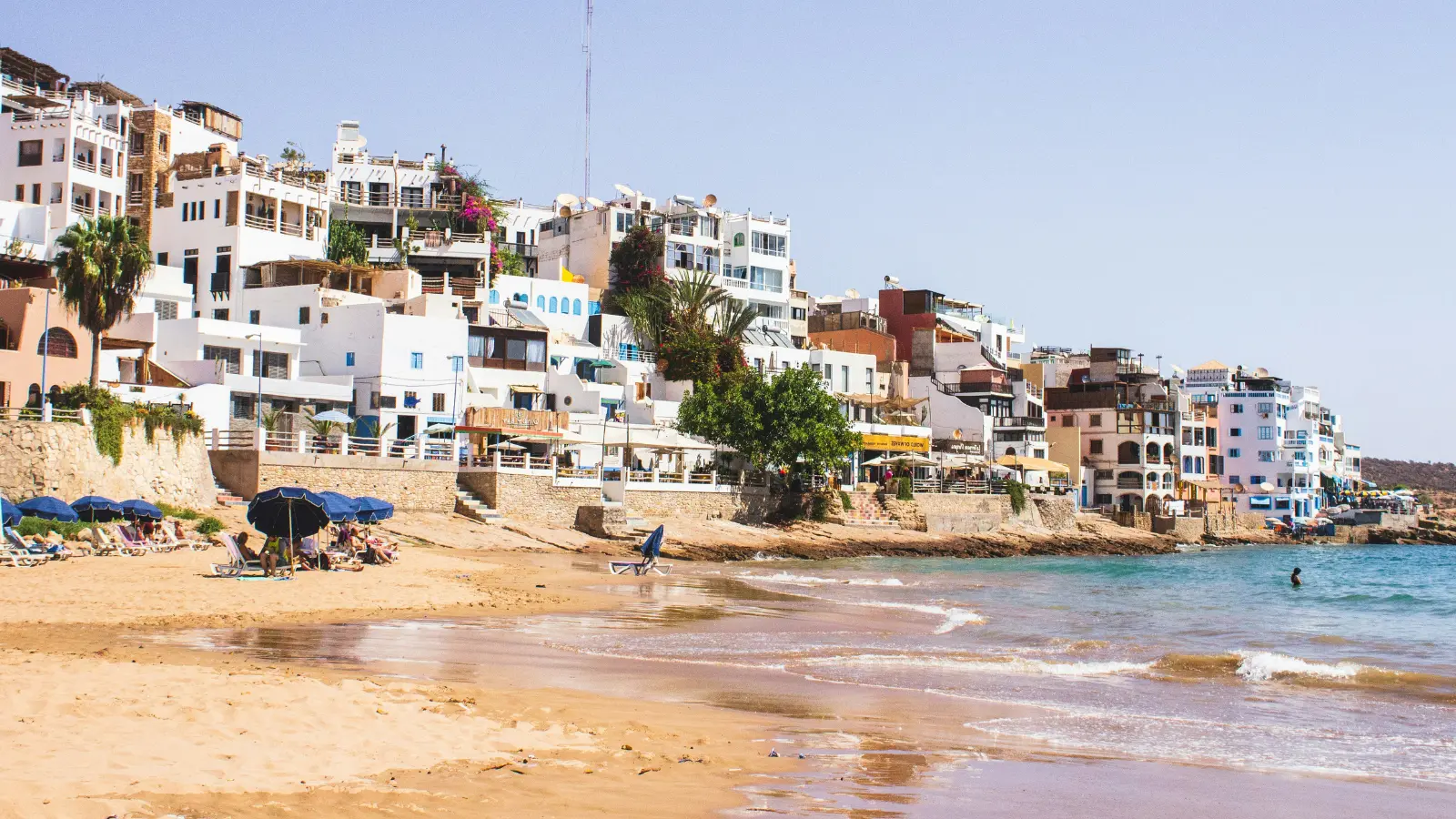
If you are wondering whether Taghazout is worth visiting, the honest answer is yes — but only if you want the kind of place Taghazout actually is now, not the sleepy secret surf village it used to be. National Geographic describes it as a once-sleepy fishing village that has transformed into Morocco’s trendiest beach town, while Morocco’s own tourism material still sells it as a bohemian surf-and-yoga haven where blue boats, traditional cafés, and surf shops line the shore. That combination is the key to understanding Taghazout: it still has charm, but it is no longer hidden. (National Geographic)
So, is Taghazout worth visiting? Yes, absolutely, if you want surf culture, ocean views, a laid-back social atmosphere, and a coastal Morocco trip that feels more relaxed than the country’s big cities. No, not really, if you are chasing total authenticity, total quiet, or a dramatic list of big-ticket sights. What makes Taghazout appealing is not monument-heavy sightseeing. It is the rhythm: beach mornings, surf breaks, rooftop cafés, yoga, easy sunsets, and the Atlantic always close by. (National Geographic)
Quick answer
Yes, Taghazout is worth visiting if you want one of Morocco’s strongest surf-and-sea destinations, especially if you like places that feel social, scenic, and easy to settle into for a few days. National Geographic says Taghazout has long been considered the capital of surfing in Morocco, and Morocco’s tourism material describes it as a surfer’s paradise with a bohemian atmosphere and a lifestyle shaped by the waves. (National Geographic)
It may not be worth visiting if you expect an untouched fishing village, a luxury-only beach resort, or a classic Morocco itinerary stop full of medinas, palaces, and historic landmarks. Current coverage makes clear that Taghazout has seen major development, while Taghazout Bay’s official site shows just how much the area now includes golf, surf academies, and large resort infrastructure. (National Geographic)
What makes Taghazout special?
What makes Taghazout special is that it still revolves around the ocean in a way that feels natural rather than staged. National Geographic says the town has long attracted surfers, backpackers, and free spirits because of its bohemian vibe, and Surf Maroc describes it as a unique gem on Morocco’s Atlantic coast with year-round warm water, perfect waves, and a distinctive cultural feel. That gives Taghazout an identity that is stronger than just “nice beach town.” It feels built around a lifestyle. (National Geographic)
The surf scene is a huge part of that. National Geographic highlights Anchor Point, Devils Rock, Banana Beach, and Panoramas as major breaks, and explicitly notes that the area works for different skill levels, from beginners on gentler waves to advanced surfers on more famous point breaks. That matters because it means Taghazout is not only attractive to hardcore surfers. It also works for travelers who are curious about surfing but do not want to book an intimidating specialist destination. (National Geographic)
It is also special because it gives you a softer, more coastal side of Morocco. Morocco’s tourism PDF describes mornings of yoga facing the sea, afternoons on Paradise Beach, and a bohemian atmosphere shaped by waves and nature. That image is very different from Marrakech or Fès. Taghazout is not about sensory overload or maze-like city exploration. It is about sea air, slower mornings, and the feeling that the day can stay loose.
The biggest reasons Taghazout is worth visiting
One of the strongest reasons Taghazout is worth visiting is that it is easy to enjoy without needing a complicated itinerary. Surf Maroc says it is about 40 minutes from Agadir international airport, making it a relatively accessible coastal base compared with more remote surf destinations. For travelers who want a beach-and-surf trip without spending half the holiday on transfers, that is a real advantage. (Surf Maroc)
Another reason is that Taghazout offers different levels of comfort without losing the coastline itself. You can stay in the village if you want surf houses, cafés, and a more social scene, or in Taghazout Bay if you want resort comfort, pools, a spa, and private-beach style ease. Official Taghazout Bay material promotes surf academies, kids’ facilities, and golf, while Hilton’s own page places its resort four kilometres from Taghazout village and emphasizes private beach access, multiple pools, childcare, and spa facilities. That range makes the destination work for more than one type of traveler. (Taghazout Bay)
We also found that Taghazout seems especially strong for travelers who like “light structure” destinations. You do not need to spend every day racing between major attractions. The destination itself supports a simpler rhythm: surf, café, walk, beach, sunset, repeat. National Geographic’s description of strolling Taghazout’s alleyways past surf shops, guesthouses, tea spots, and vegan cafés backs that up. It sounds like the kind of place where the in-between time is part of the point. (National Geographic)
The atmosphere is another major plus. Morocco’s tourism material still frames the town as living to the rhythm of the waves in a bohemian setting, and National Geographic says the soul of the village remains intact even after development. That does not mean Taghazout is frozen in time. It means the place still seems to have a recognizable personality instead of becoming a generic resort strip. (National Geographic)
And if you care about surfing specifically, Taghazout is one of Morocco’s most convincing yeses. Official and current travel sources repeatedly frame it as one of the country’s defining surf hubs, with famous breaks and a year-round surf identity. Even Taghazout Bay’s official site promotes the broader coastline as a major surfing destination with strong spots within 50 kilometres of the resort. That is not incidental. Surf is one of the main reasons the place matters. (National Geographic)
The honest downsides
Taghazout is not for everyone, and being clear about that makes the recommendation more trustworthy. The biggest downside is that it is no longer particularly undiscovered. National Geographic says it has transformed significantly through national tourism development and that visitors will now find boutique shops, yoga studios, art galleries, vegan cafés, upscale dining, eco-friendly hotels, and guesthouses. So if you are searching for a truly untouched Atlantic village, Taghazout may disappoint you. (National Geographic)
A second downside is that the destination now has a split identity. Some travelers will love that there is both an original surf-village feel and a more polished Taghazout Bay resort zone. Others may find that contrast slightly awkward. You can move between backpacker cafés and branded luxury resorts in the same broader area, which means Taghazout can feel both charming and commercialized depending on where you stand. That is not a flaw exactly, but it does mean expectations matter. (National Geographic)
Another downside is that Taghazout is not rich in traditional sightseeing. This is not the place to come for major historical monuments, museum-hopping, or a packed urban cultural itinerary. The appeal is coastal lifestyle rather than landmark density. That is why some travelers end up loving it while others ask, after two days, “What now?” National Geographic’s emphasis on surf, strolling, food, and village atmosphere supports that reading. (National Geographic)
And while the surf identity is a strength, it can also narrow the destination a bit. If you do not care about surfing, the beach, yoga, or simply hanging out by the ocean, Taghazout loses much of its edge. Morocco’s official tourism copy and Surf Maroc both lean heavily on waves, yoga, and coastal living. That is useful because it tells you the truth up front: the destination knows what it is.
Who should visit Taghazout?
Taghazout is worth visiting for surfers, aspiring surfers, and people who like beach towns with a strong built-in culture. Beginners have suitable options too: National Geographic points to Banana Beach and Panoramas as good starting spots with gentler waves, while more advanced surfers can chase breaks like Anchor Point and Boilers. That range makes Taghazout unusually welcoming across skill levels. (National Geographic)
It is also a good fit for couples who want a relaxed coastal break with either boutique character or resort comfort. The village side works well for couples who like cafés, rooftop views, and a slightly social atmosphere. Taghazout Bay works better for couples who want spa time, a private beach, and a more polished holiday frame. The existence of both kinds of stay is one of the reasons Taghazout has broadened beyond its older backpacker-only image. (National Geographic)
Taghazout also makes sense for digital nomads and slower travelers. We found in the research that many of the destination’s selling points are not single attractions but repeatable pleasures: surf in the morning, long lunch, walk through town, beach again, maybe yoga, maybe sunset. Places with that rhythm often work better for a week than for one rushed night, and Taghazout seems to fall into that category. (National Geographic)
Families can enjoy Taghazout too, but usually more on the Taghazout Bay side than in the village itself. Taghazout Bay’s official site promotes integrated kids’ facilities around its surf academy, and Hilton explicitly highlights childcare, a playground, family amenities, pools, and beach access. That makes the broader destination more family-friendly than the word “surf town” might suggest at first glance. (Taghazout Bay)
Who should skip it?
You should probably skip Taghazout if what you really want is the Morocco of imperial cities, souks, and historic architecture. Taghazout is too beach-led and too lifestyle-driven to satisfy that kind of trip on its own. It works better as a coast break than as a substitute for the country’s great cultural cities. That is not because it lacks culture, but because its culture is more contemporary, coastal, and surf-shaped. (National Geographic)
You may also want to skip it if you are hoping for a truly secret place. Morocco’s own tourism material says Taghazout was long considered a secret spot but has become a surfer’s paradise in just a few years, and National Geographic openly frames it as Morocco’s trendiest beach town. That is pretty much the opposite of a hidden gem.
And if you dislike slightly social destinations where cafés, surf culture, and beach energy are always part of the background, Taghazout may simply not be your scene. The place’s strengths are also its personality traits, and those do not suit everyone. (National Geographic)
Best time to visit Taghazout
Taghazout is one of those destinations that can work year-round, but the best time depends on why you are going. Surf Maroc emphasizes year-round warm water and year-round appeal, which helps explain why the town has such a steady international surf identity. (Surf Maroc)
If surfing is the priority, current surf guidance generally points to the cooler months as the stronger season for consistent Atlantic swell. Recent surf sources describe roughly October to March or April as the main surf window, with winter bringing the most powerful and reliable conditions, while summer is calmer and more beginner-friendly. That means experienced surfers tend to get more out of the winter half of the year, while beginners or travelers who mostly want beach time may prefer the gentler summer mood. (wavesnbackpack)
If your trip is less about surfing and more about sea air, beach cafés, and easy coastal relaxation, the broader point matters more than exact surf months: Taghazout is strong when you want warmth, a loose rhythm, and time outdoors. We found that the place seems more about mood than exact scheduling unless you are planning the trip around waves. (Surf Maroc)
Final verdict
So, is Taghazout worth visiting? Yes — for the right traveler, very much so. It is worth visiting if you want Morocco by the ocean, with surf culture, beach life, yoga, easygoing cafés, and a more relaxed social rhythm than the country’s big city stops. Current official and recent travel sources agree on the fundamentals: Taghazout has become one of Morocco’s defining surf destinations, and even after major development, it still carries a bohemian coastal identity. (National Geographic)
But it is worth visiting for what it is now, not for what it used to be. This is no longer an untouched secret. It is a well-known surf town with a resort zone beside it, and your experience will depend heavily on whether that sounds exciting or disappointing. The strongest case for Taghazout is not “come before everyone else discovers it.” That phase is over. The stronger case is: come if you want a beach destination with real personality, strong surf culture, and enough variety to let you choose between village energy and resort comfort. (National Geographic)
And that is exactly why Taghazout still works. It may be more polished, more noticed, and more divided into micro-scenes than before, but it still seems to offer something many coastal destinations lose as they grow: a recognizable soul. (National Geographic)